Local Pickleball Clubs: Era Pickleball’s Community Network
In the last few years, pickleball has grown from a weekend hobby to a civic ritual in many towns. Courts spill into rec centers, school gyms repurpose into community hubs, and players trade stories about shots and seasons the way other folks trade recipes. At the heart of this expansion sits Era Pickleball, a network that has quietly stitched together dozens of local clubs into a cohesive, responsive ecosystem. This is not just about more courts or faster dinks. It’s about building a living culture around the sport, where a new player can walk into a facility and feel instantly seen, coached, and connected.
Era Pickleball’s approach starts with proximity. The company leans into neighborhood access, offering both indoor and outdoor options so players can practice year round, regardless of weather. Indoor pickleball courts are a recurring feature in urban centers and growing suburbs alike, providing reliable bounce and controlled lighting that reduce early morning or late-evening hazards. Outdoor courts, meanwhile, link parks and community spaces to the sport, turning a sunny afternoon into a social event as much as a match. The result is a distributed network that keeps players within a short drive of home while expanding opportunities to learn, compete, and socialize.
This model matters for a simple reason: community is the competitive edge in pickleball. The best players often come from clubs that do more than schedule games. They foster mentorship, create maps of contested leagues, and build routines that turn casual players into regulars. Era Pickleball’s local clubs do exactly that by stitching together facilities, coaching, leagues, and events into an everyday rhythm. The real payoff is practical: more consistent practice, less travel fatigue, and a sense that you’re part of something bigger than your own pickup games.
A closer look at the elements of Era Pickleball’s community network reveals how it translates into real, day-to-day benefits for players at every level.
Facilities that fit real life
One challenge I see repeatedly in the sport is misalignment between where people live and where they play. Era Pickleball addresses this with a two-pronged facility strategy. First, indoor pickleball courts offer a reliable surface, climate control, and predictable lighting. Second, outdoor pickleball courts situate themselves in friendly, easy-to-access venues—parks, community centers, and light-industrial zones that spark a new kind of public integration.
The indoor courts tend to be multiple courts per site, with scheduling that prioritizes open play during non-peak hours and structured drills for mornings when minds are fresh. It’s not unusual to walk into a gym and see a bulletin board full of court assignments, coaching rosters, and a calendar that looks part sports schedule, part community bulletin. The outdoor courts, by contrast, often carry a social aura: a row of nets standing at the ready, a shade canopy or two, and players who pause between points to swap stories about a tricky slice or a fortunate wind gust that battered a return.
For players, the practical upshot is straightforward. You can schedule time without negotiating attendance with a dozen instructors. You can bring a friend who is new to the sport and not feel overwhelmed by a complex membership structure. And you can expect a baseline of safety and maintenance that is consistent across sites, which is a big deal when you’re building a habit.
Access to coaching and structured learning
Learning matters as much as playing. Era Pickleball’s clubs recognize that a healthy sport culture requires accessible coaching that respects different learning paces. When a club hosts a series of lessons, it often runs tiers designed for beginners, intermediates, and advanced players, with a practical progression mapped onto a few progressive weeks. A typical beginner track might cover fundamentals—grip, stance, basic dink patterns, footwork for moving on and off the kitchen line—while also embedding core etiquette and scoring conventions. Intermediate tracks tend to emphasize shot selection in doubles, situational drills, and match play to translate technique into competitive outcomes. Advanced programs zero in on consistency under pressure, strategy with different partners, and footprint management in crowded courts.
In my own experience coaching within such networks, the most meaningful moment is when a player who has spent months practicing a particular serve finally lands it in a game with real stakes. The confidence that follows is tangible. It shows up not just in a single point but in a broader shift of how players carry themselves during rallies, how they anticipate opponents’ moves, and how they help teammates when pressure rises. Clubs that pair clinics with open play windows tend to see the most durable improvement because players can apply what they’ve learned right away.
A key advantage of Era Pickleball’s approach is the portfolio of learning formats. You’ll see short, focused drills for quick improvement between work shifts, longer weekend clinics that tackle a theme across multiple sessions, and structured league play that pairs players into regular competition to reinforce practice outcomes. The cadence matters. It creates a reliable path from first contact through steady improvement, which reduces frustration and increases the likelihood of ongoing participation.
Leagues that feel like communities
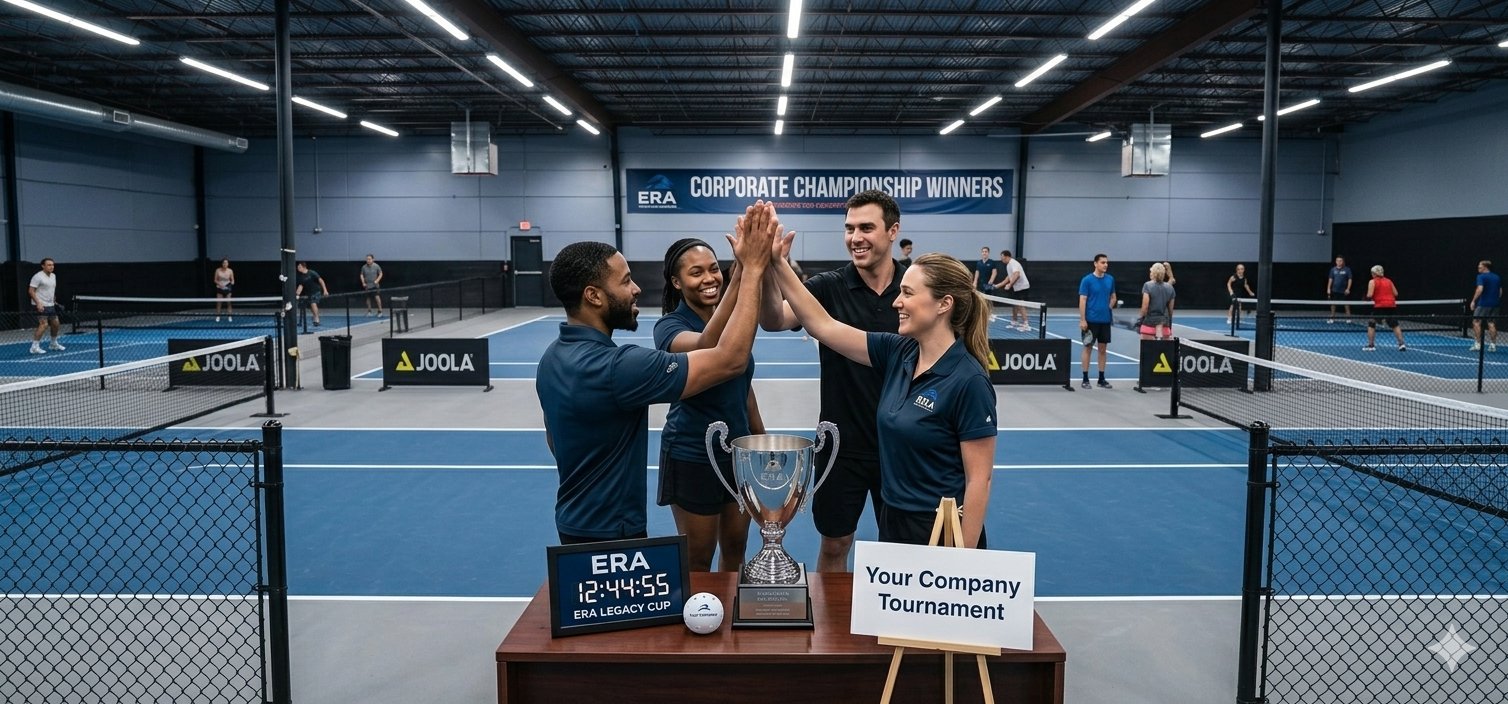
Leagues do more than create a scoreboard. They create a shared routine, a way to calibrate your progress against peers, and a social calendar you can plan your life around. Era Pickleball’s leagues are designed to be inclusive and scalable, with options that accommodate newcomers and seasoned players alike. A typical league structure blends round-robin play with organized doubles teams, so you’re never stuck chasing a court in vain or waiting for a partner to appear. You’ll often find multiple divisions running in parallel, so players can graduate from one level to the next as their skills and confidence grow.
The social dimension of leagues deserves emphasis. Many clubs stage post-match gatherings at nearby coffee shops or community centers, creating opportunities to talk through hands and decisions away from the court. In an ideal setup, a league night becomes a mini-event: a few good matches, a quick debrief on what worked and what didn’t, and a chance to swap tips with players who are usually just a little ahead on the learning curve. This is where the “network” portion of Era Pickleball’s identity shines. Clubs become places where you meet your future doubles partner, your neighbor who shares a similar work schedule, or the parent who can bring snacks and stay for the entire evening.
Membership options that respect your time and budget
People join clubs for access, community, and predictable costs. Era Pickleball’s membership architecture tends to balance these three concerns. You’ll often encounter tiered memberships that grant different levels of court access, coaching privileges, and guest passes, alongside drop-in options for players who want flexibility. The pricing spectrum isn’t universal, but a sensible model looks like this: a base access pass for open play, a mid-tier plan that includes a handful of coaching sessions or clinics each month, and a premium option that bundles courts, clinics, and league entry into one predictable monthly expense.
Transparency around booking policies and wait times is critical. Members should be able to see court availability in real time, reserve slots during peak times without feeling nickel-and-dimed, and understand cancellation policies when life interferes with a match. In practice, the most trusted clubs publish a straightforward schedule with clear windows for open play, reserved lessons, and league blocks. When this is well executed, you don’t just feel like you’ve joined a club—you feel like you’ve joined a reliable system that respects your time and your wallet.
A note on inclusivity and accessibility
A strong community is built on inclusive access. Era Pickleball’s local clubs frequently emphasize accessibility—whether that means facilities with ADA-compliant layouts, adaptive equipment for players with different abilities, or flexible scheduling that accommodates working families and students. It’s not just black and white; it’s about forging pathways. That can include free trial days for newcomers, volunteer-led clinics to bring in a wider audience, and partnerships with schools or senior centers to introduce the sport to a broader cross-section of the community.
In the trenches, I’ve watched clubs turn potential barriers into invitations. A busy weekday schedule can feel daunting for a parent with a child who has after-school commitments. But when a club offers a few morning or early evening slots specifically for families, you suddenly see a different kind of energy in the gym. The court becomes a place where kids observe adults in motion, where siblings encourage each other, and where a family activity becomes a weekly pickleball near me fixture rather than a one-off experiment.
Practicalities of integrating Era Pickleball into your routine
If you’re thinking about plugging Era Pickleball into your life, a few concrete steps help you move from curiosity to consistency.
First, map your commute and your preferred practice times. Indoor courts are often more predictable for weekend mornings and after-work slots, while outdoor courts shine on late afternoons and weekends when the sun feels friendly. Second, check for a nearby club that aligns with your goals. Some facilities lean toward social play, others toward structured competition, and some blend both in a way that suits players who want to evolve their game without losing the social fabric.
Third, take a trial run. Most clubs offer a guest or trial membership window that lets you sample a few clinics and open play sessions without a long-term commitment. This is the decisive moment: do you feel comfortable with the coaching style, the pace of the sessions, and the camaraderie on the court? Fourth, dive into a clinic or league early. The sooner you attach yourself to a shared calendar, the sooner you start building relationships that keep you coming back beyond the initial novelty.
Fitting into a local ecosystem
Era Pickleball thrives when it plugs into the broader local sports and recreation ecosystem. A healthy club network intersects with schools’ after-school programs, parks and recreation departments, neighborhood associations, and even small businesses that sponsor events or host clinics. The richer the network, the more doors open for players who want to advance. For example, a club might partner with a local gym to provide cross-training opportunities or collaborate with a downtown co-working space to host weekly lunchtime clinics for the urban professional who wants to squeeze in a quick, focused session between meetings.
Trade-offs and edge cases
No system is perfect, and a dense network like Era Pickleball’s will encounter friction points. Court availability can become a bottleneck in high-demand areas, especially during winter when indoor facilities fill quickly. Some clubs may struggle with staffing shortages for coaching, especially for weekend programs. In these cases, the most successful clubs lean on a core of resident instructors who rotate teaching duties and rely on capable assistants to keep sessions engaging and well paced.
Edge scenarios often reveal the deepest truths about a club’s culture. A new member who arrives with advanced skills but limited time might crave a fast track that still respects the rest of the group. A club that handles this gracefully will offer short, targeted clinics for the skilled player while continuing to provide inclusive options for newer players. Another example is the mixed-ability doubles scenario, where pairing strong players with beginners must be managed with care to prevent frustration on all sides. The best networks choreograph these situations with clear roles, supportive coaching, and a shared language that makes everyone feel productive rather than sidelined.
What the era of local clubs means for the sport
The growth of Era Pickleball’s community network signals a maturation of pickleball from casual pastime to structured, ongoing practice. The implications go beyond winning points. They touch on how people learn, how they connect with neighbors, and how a sport can become part of a city’s social fabric. When a club is well run, it becomes a usable space for families to schedule a regular activity, for retirees to stay active and engaged, and for young players to observe what it means to stay committed to a practice. In that sense, the network is less about any single court and more about a shared expectation: that the sport belongs to the community and the community belongs to the sport.
Two practical reflections on joining and participating
- Choose your entry point thoughtfully. If you’re new, a structured beginner clinic paired with open play is a gentle but effective way to learn. If you’re returning after a break, a refresher session followed by a social doubles night can reestablish rhythm and motivation.
- Prioritize the social anchor. Courts are important, but the real glue is the people you share time with on the court. Look for clubs that run post-match gatherings, casual clinics, or small group scrimmages that let you build relationships beyond the scoreboard.
What to look for when visiting a local Era Pickleball club
- Clear scheduling and court availability. You want to know when you can book a court, how soon you can expect a response to a booking, and whether there are any hidden fees for peak times.
- A welcoming coaching staff. Observe how coaches introduce themselves, how they correct technique, and how they balance warmth with accountability.
- A visible code of conduct. A healthy culture is defined by how players treat each other—handshakes after matches, shared tips without sarcasm, and a readiness to help someone new.
- Accessibility and inclusivity. Look for adaptive equipment options, ramps or accessible entrances, and programs that actively invite underrepresented groups into the sport.
- Realistic membership expectations. If you’re evaluating a plan, ask about cancellation terms, what happens if you miss a month, and how clinics or leagues are prorated if you rejoin mid-cycle.
A future you can see
If you walk into an Era Pickleball facility and notice a floor plan that resembles a living map of the community, you’re likely witnessing the core strength of this model. The network effect compounds quickly: as more players join, more clinics seed into the calendar, more leagues populate the evenings, and more families participate in weekend events. It is a virtuous loop, turning a local club into a platform for personal growth, social connections, and even neighborhood pride.
Through a blend of accessible indoor and outdoor facilities, structured learning, diverse leagues, transparent memberships, and a clear emphasis on inclusivity, Era Pickleball crafts a local ecosystem that can sustain the sport as it continues to attract new players. The approach respects the reality that people come to pickleball for different reasons—fitness, fun, competition, social life—and it offers pathways that honor those motivations without forcing a one-size-fits-all solution. In practice, the network does more than keep score. It sustains enthusiasm, fosters skill development, and builds trust among neighbors who learn to play, cheer, and grow together.
Two thoughtful considerations for clubs and players as the network evolves
- Embrace data without losing humanity. Collect court usage metrics, attendance, and coaching outcomes to improve scheduling and programming, but preserve the human touch that makes a club feel like a fifth home. People want to be seen as individuals, not as numbers on a dashboard.
- Balance competition with community. Leagues drive progress, but the heart of any club is social belonging. If a league night hardens into a solitary grind, it loses its broader value. The best programs weave competitive play with casual, friendly touchpoints that remind players why they love the game in the first place.
In the end, local pickleball clubs under Era Pickleball’s umbrella are not just facilities with nets and paddles. They are social machines that translate a sport into a daily habit, a support system, and a neighborhood-wide invitation to move, learn, and connect. The result is a network that delivers on a simple promise: you don’t have to go far to find your next decent rally, your next friend on the court, or your next reason to show up and play again tomorrow.